Opportunity Cost
Another steep curve

I’ve written 12 novels. You can read an experimental one here. I’ve also published various short stories, which you can read here. I’m particularly happy with the web experience for Crossing the Wetlands, an ecological romance novella.
I have mixed feelings about the idea of “building an audience” for fiction. But I have positive feelings about my work being broadly available, so someone who likes it can browse to their heart’s content. I have received one piece of fan mail from a stranger about my online novel, and it’d be nice to invite more of that.
I can imagine it now. A “library” section of my personal website, with a carefully polished aesthetic, with links to each work that open into customized experiences with all the bells and whistles. Mobile friendly, keeping your place when you leave, optional unobtrusive backgrounds that match the themes, links in the “about” section to YouTube playlists of recommended songs to pair with any given story. I could even hold a few novels back in case I ever want to query agents, and still release tons and tons of fiction, for free, in a way I’d be really proud to share with cool people I meet at parties. “What do you do?” “Oh, I write fiction. Here it is.”
I hope someday soon, one of my weekly posts will announce this project’s completion. But that’s not this post.
Case Notes Hero
My dad’s a therapist. One of my friends is a social worker. They have to write case notes. This activity seems pretty badly suited to the human brain; you have an hour long conversation with lots of detail, and then have to summarize the important bits afterward.
Shouldn’t there be systems that could help with this? Like, OpenAI’s free whisper can transcribe streaming audio. There are tools to automatically make a transcript. And other tools to create a summary of that transcript. The whole thing could be done on a user’s device; record the conversation locally, generate the summary, delete the recording, email the summary to the therapist or social worker. Probably HIPAA would cause problems here, and even typing this sentence I am afraid that someone will Kool Aid Man through the nearest wall to arrest me on the basis of this imaginary project I may one day attempt. But in theory you could make this app, and sell it for a $20 one time fee, and help lots of social workers and therapists have a better time.
The Idea(s)
Maybe you get the idea. But in case you don’t, here are more projects:
My personal finances could be better organized, such that I automatically have a sense of how things are going at a single glance, instead of having to log into a bunch of separate accounts and add numbers up.
My exercise routine could be much better, if I simply kept careful track of reps, weight, etc. I’d also like to someday be able to touch my toes without bending my knees, and a rotation of different yoga courses might help there.
I could probably have fun conversations at local meetups related to my interests, if I went to the trouble to find them. Or at least try.
My baby is obsessed with her letters. I made an Anki deck for her as a game, but only put the few letters she knows the best. I should update it to have all 26 letters, and see if she has more fun with it now that her skills have increased.
I could organize all these goals better, such that when I have the itch to accomplish something and miraculously have no urgent professional or parenting tasks pending, it would be lower friction to get started.
The Point
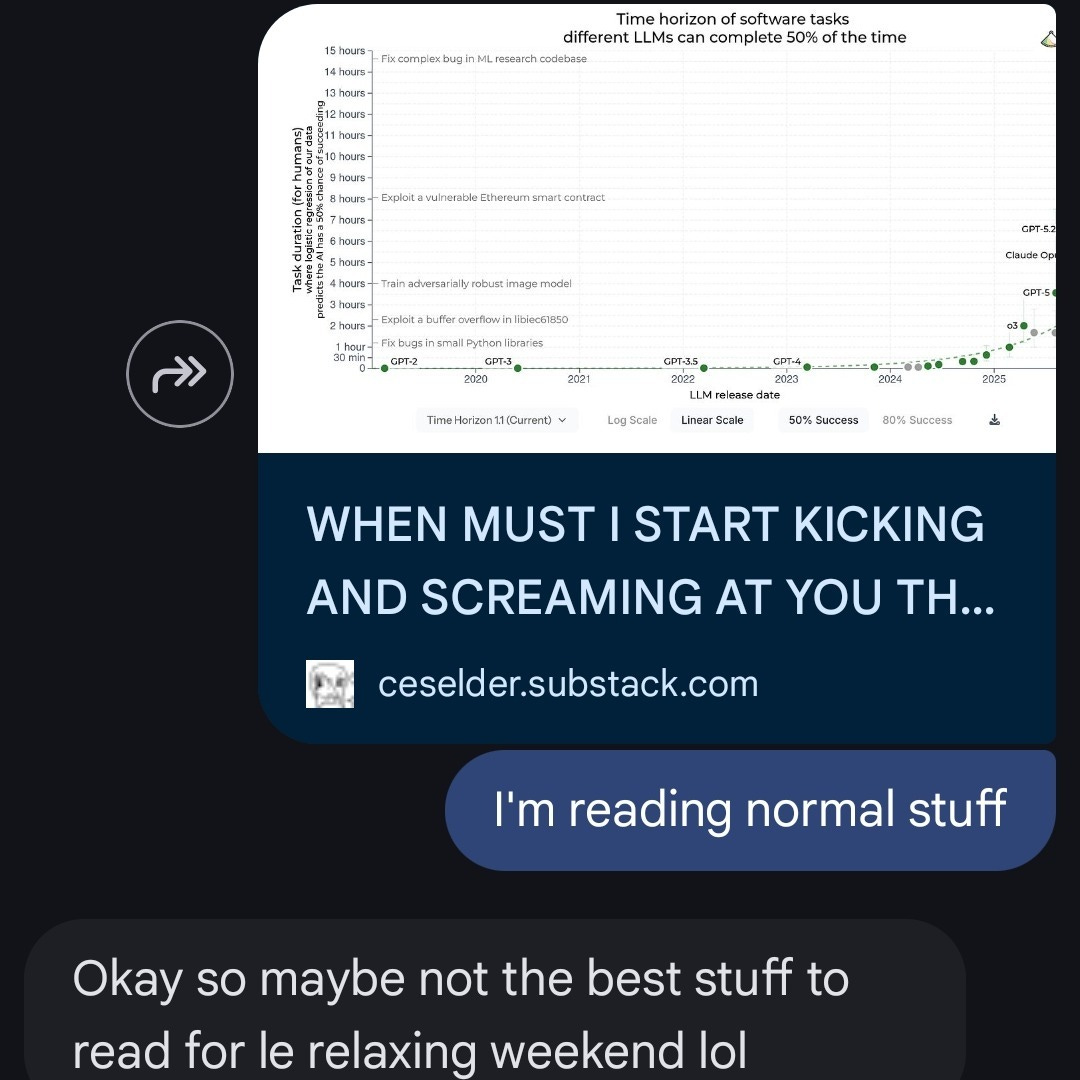
In the current AI era, all of this stuff has gotten much easier. I could probably make a pretty decent library of my fiction in a day. I could either make the case notes app or get far enough to give up in a couple weekends. I could have AI generate baby’s Anki deck for me in 2 minutes, or come up with both an automated exercise program and tracking system for myself in half an hour.
And not only is it easier to do this stuff on a basic level, it’s also easier to spruce each one up to a slightly better level. Like, if I want to go to meetups I could just check meetup sites. But I could also create a scraper that aggregates across a few different meetup sites, and sends me a custom email when one is unusually likely to meet my preferences. Which would probably take, like, an hour or two.
Basically, if it’s a software project, simply bothering to try is most of the battle. Hours of effort are quite likely to yield usable, cool stuff. And it turns out there are lots of ways to use software to make your life better. And even physical projects, of which I also have several (e.g. organizing my bookshelf), can benefit from software tooling at the organizational stages.
So the opportunity cost of just kind of vibing, or gaming, or whatever, feels much higher than it used to. I could play around with Claude Code, which feels kind of like a video game, and end up with an actual useful output. So why not just do that all the time? In every free moment? The obvious answer here is burnout, that rest is valuable in and of itself and directing a coding agent is tiring. So, okay, sure. Don’t do it all the time. But how much is correct, outside of work? An hour a day? Two hours a day? Fifteen minutes? There is no objective answer, and time bleeds by nonstop.
The Answer
I don’t have one. It feels like one of two things is true:
Using modern AI tools will be an extremely important skill in the near future, and it’s actively useful in the present, so it should be a high priority
Using modern AI tools is quite useful in the present, and in the near future the tools will just use themselves and so time’s running out
Either way, seems like now is the narrow window to roll my sleeves up and boss the machine around.
But also I am very tired. My job is demanding. Having a baby is demanding. I do theoretically have free time in which I can rest. Such as this very moment. I came into my room to rest. Instead I wrote a blog post. And even now, with a box for the week freshly checked, and my lovely Nintendo Switch 2 trying its best to beckon, I feel my computer’s siren call.